Chesapeake Bay Foundation Website
Client: Chesapeake Bay Foundation
Skills: UX & Content Audits, Stakeholder Interviews, IA Development, Wireframe Development, Development Specs, CMS Training
The Challenge
The Chesapeake Bay Foundation (CBF) is the largest independent conservation organization focused on protecting and restoring life and ecosystems in and around the Chesapeake Bay. CBF’s legacy website was built on a CMS which was being sunset and they were looking to re-platform to the more intuitive WordPress CMS. As part of this shift, CBF saw an opportunity to refine the website design, improve the user experience, and update the content to better align with their current mission and priorities.
The Solution
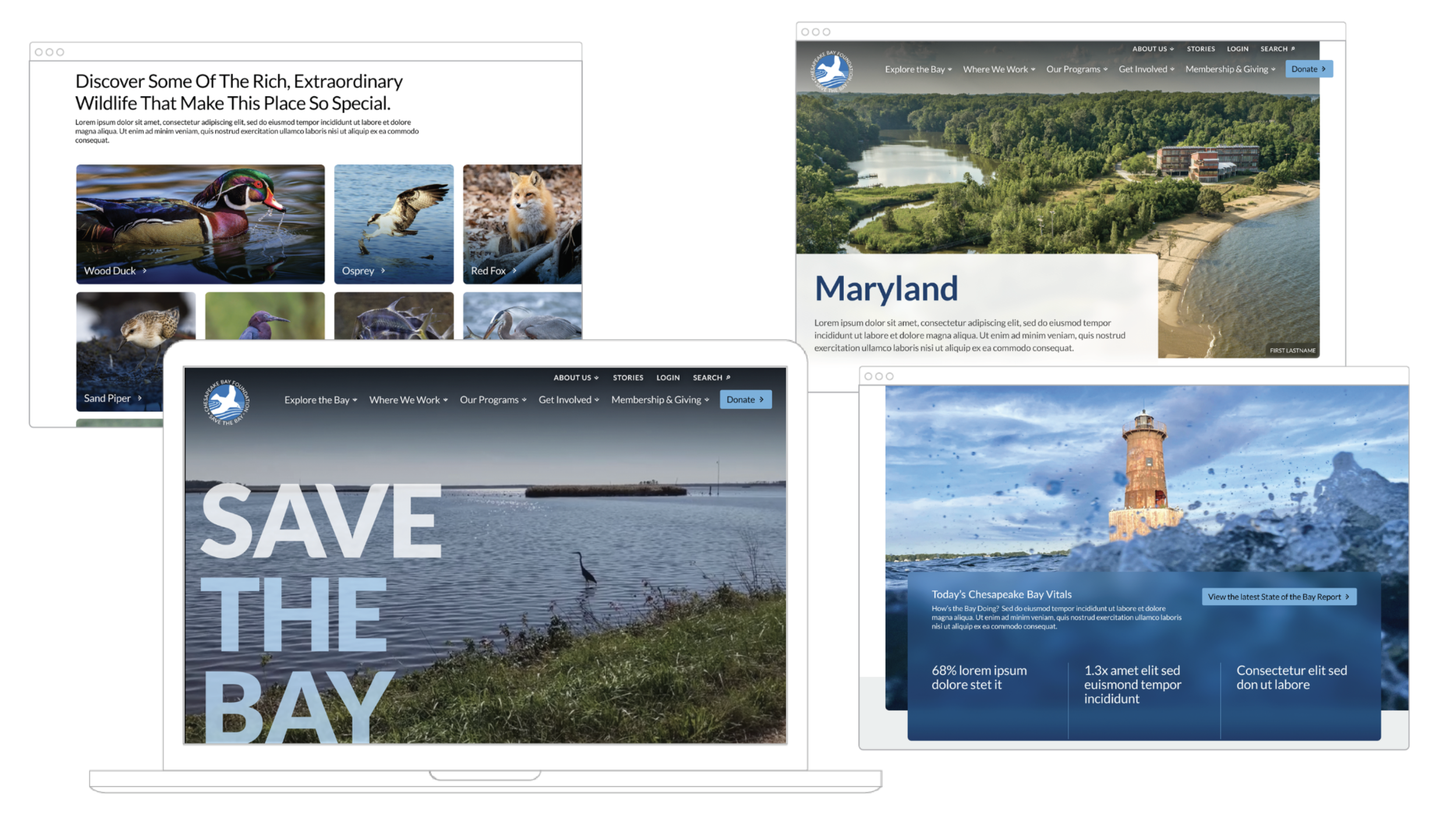
In partnership with the team at CBF, we developed a website that is clear, flexible, and built around the needs of its core audiences. The site celebrates the Chesapeake Bay and connects users to the foundation's vital work in education, advocacy, restoration, and litigation on the Bay’s behalf.
The Process
Discovery
First, we completed a series of audits reviewing the existing content, user experience, technology, analytics, and peer landscape. We also conducted stakeholder interviews to gain an internal perspective about the current state and vision for the new website. These learnings were summarized in a creative brief which defined the goals, opportunities, and vision for the redesign.
Website & Project Goals:
Drive Donations & Membership by making giving opportunities prominent, easy, and trustworthy.
Inspire users to take action through advocacy, volunteering, and environmental stewardship.
Educate users with clear, science-based information about the Chesapeake Bay and CBF’s work.
Promote programs, events, and initiatives that support CBF’s mission and impact.
Improve usability and internal workflows with a flexible, modern content management system.
Creative Direction:
Give a voice to the Bay so every visitor feels called to restore and protect it.
Definition
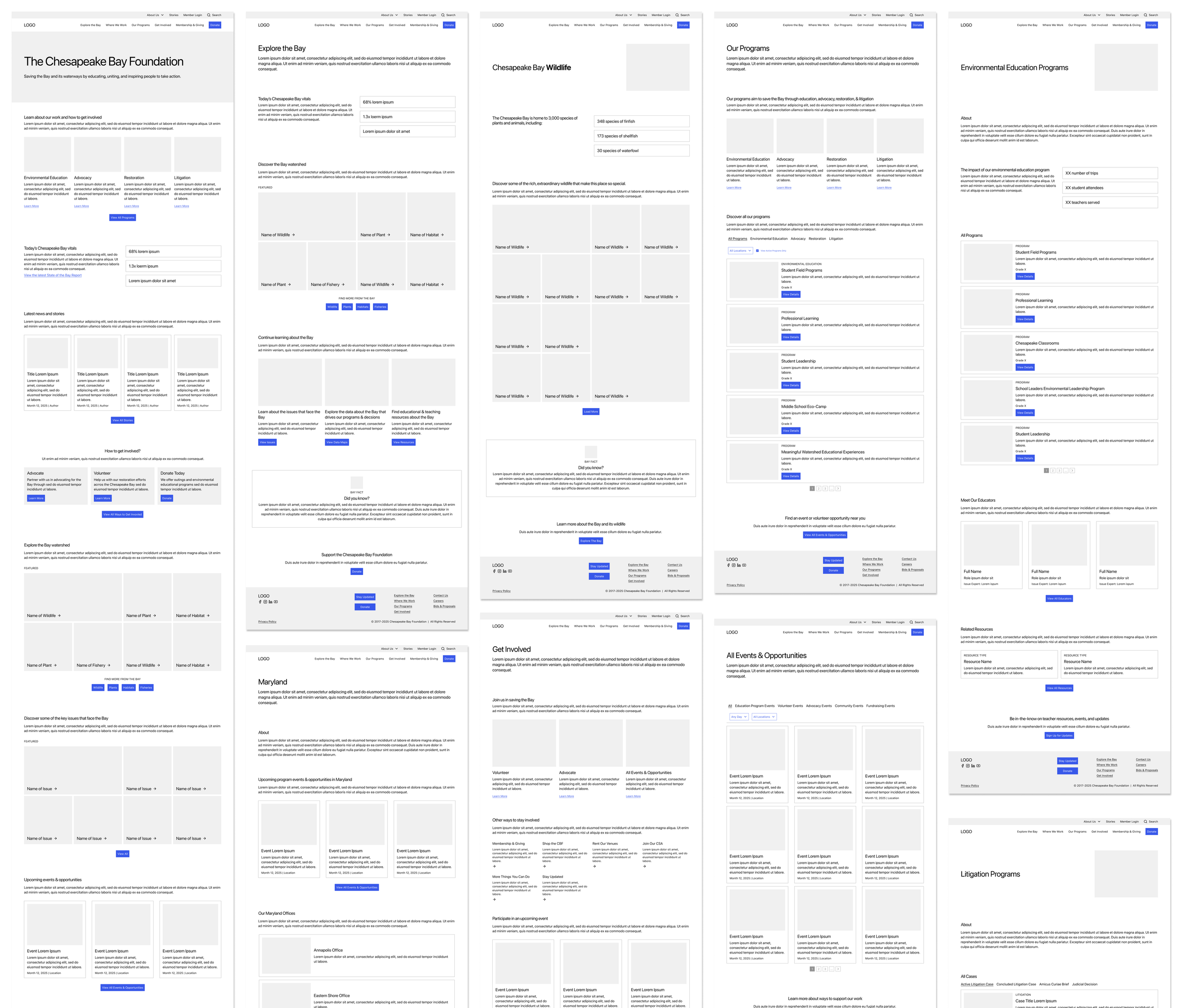
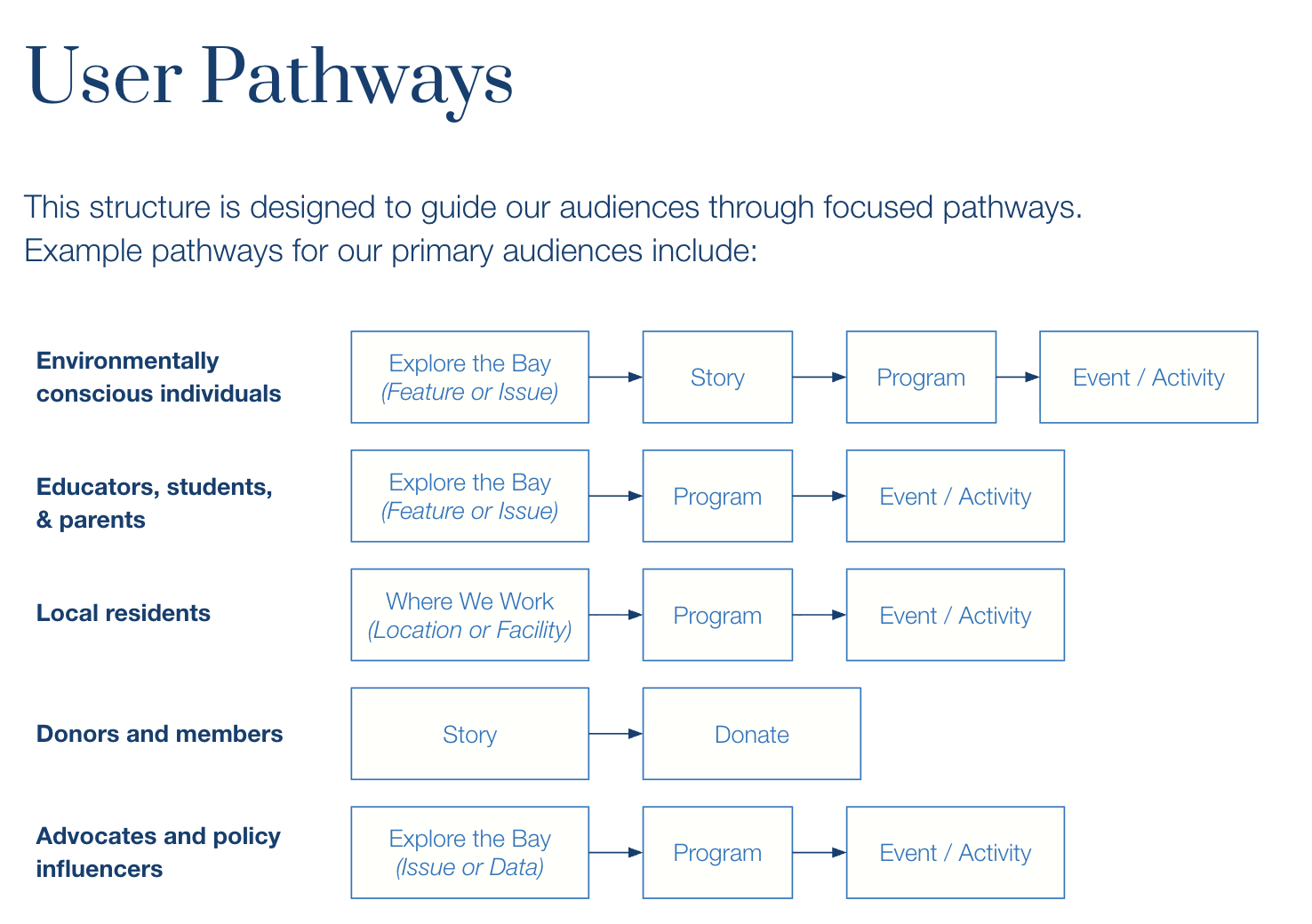
We restructured the information architecture to make it easier for users to find what they need. The established pathways aimed to elevate what is most important to visitors - nature, wildlife, and community - and from there, connect them to opportunities to learn, get involved, and support the Bay. The new structure applied taxonomies which introduced relationships between CBF’s initiatives, programs, priorities, and events. These relationships enabled us to promote related content across the site, connecting users to actions based on their interests or location.
Design
The final website encourages users to explore the ecosystems that are in and around the Bay, learn about the health of the Bay, and find local opportunities to get involved.
Visit cbf.org