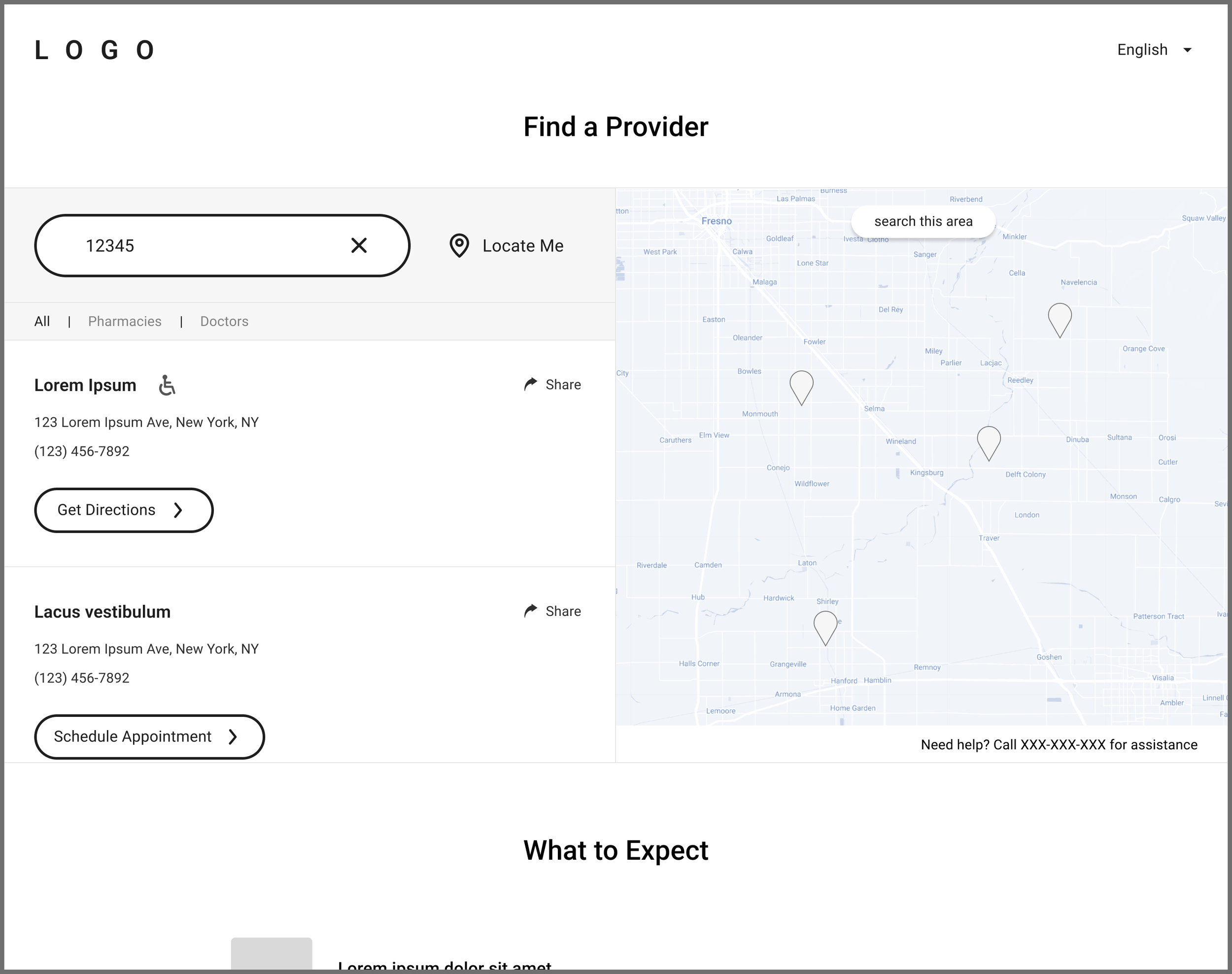
Vaccine Finder
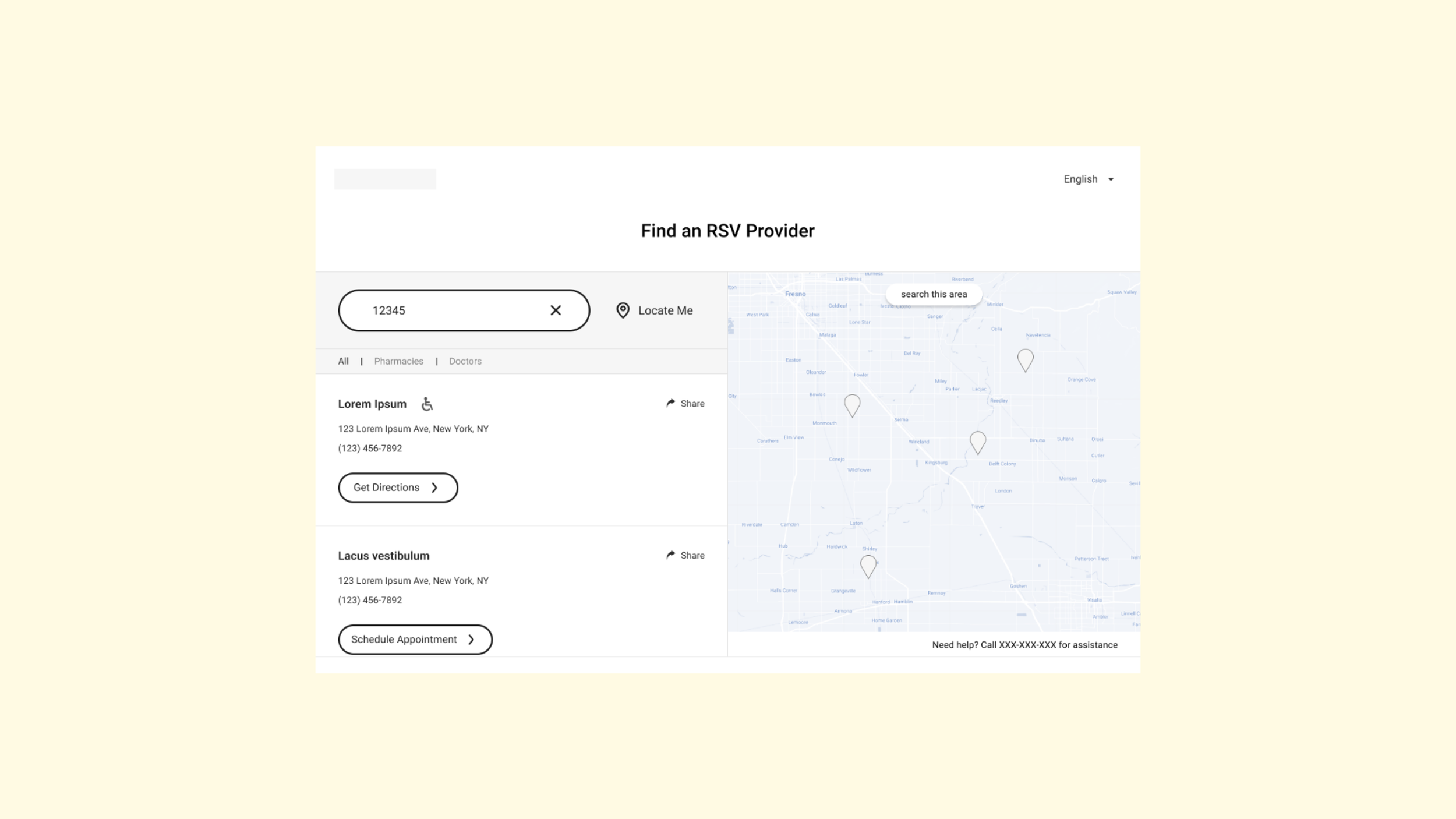
Client: Pfizer
Skills: Workshop Facilitation, User Flow Development, Wireframe Development, Prototyping
The Challenge
Our client launched a vaccine for RSV, a respiratory illness similar to the flu. They knew that only some doctors offices would store the vaccine and most patients would need to get vaccinated at a pharmacy. If the vaccine was not immediately accessible, we anticipated that some patients might not get the vaccine even if it was recommended by their doctor. In addition, patients would need to receive a maintenance dose every 1.5 years which introduced additional logistics challenges.
The Solution
We developed a vaccine finder which made it easy for patients to find a vaccine provider in their area. Users could also opt-in to a text service which helped track their maintenance status. The data we collected allowed the brand to make informed stocking decisions.
The Process
Discovery
At the beginning, we audited analogous experiences and conducted a workshop with our clients to identify features to prioritize. This lead us to define specific outcomes for the product which served as a strategic guide while we defined and built the experience:
Patients must easily find a vaccine provider and schedule their vaccination appointment.
Patients need to know what to expect and are prepared for their vaccination.
Patients need to know when they are due for a maintenance dose and get their vaccine routinely.
Definition
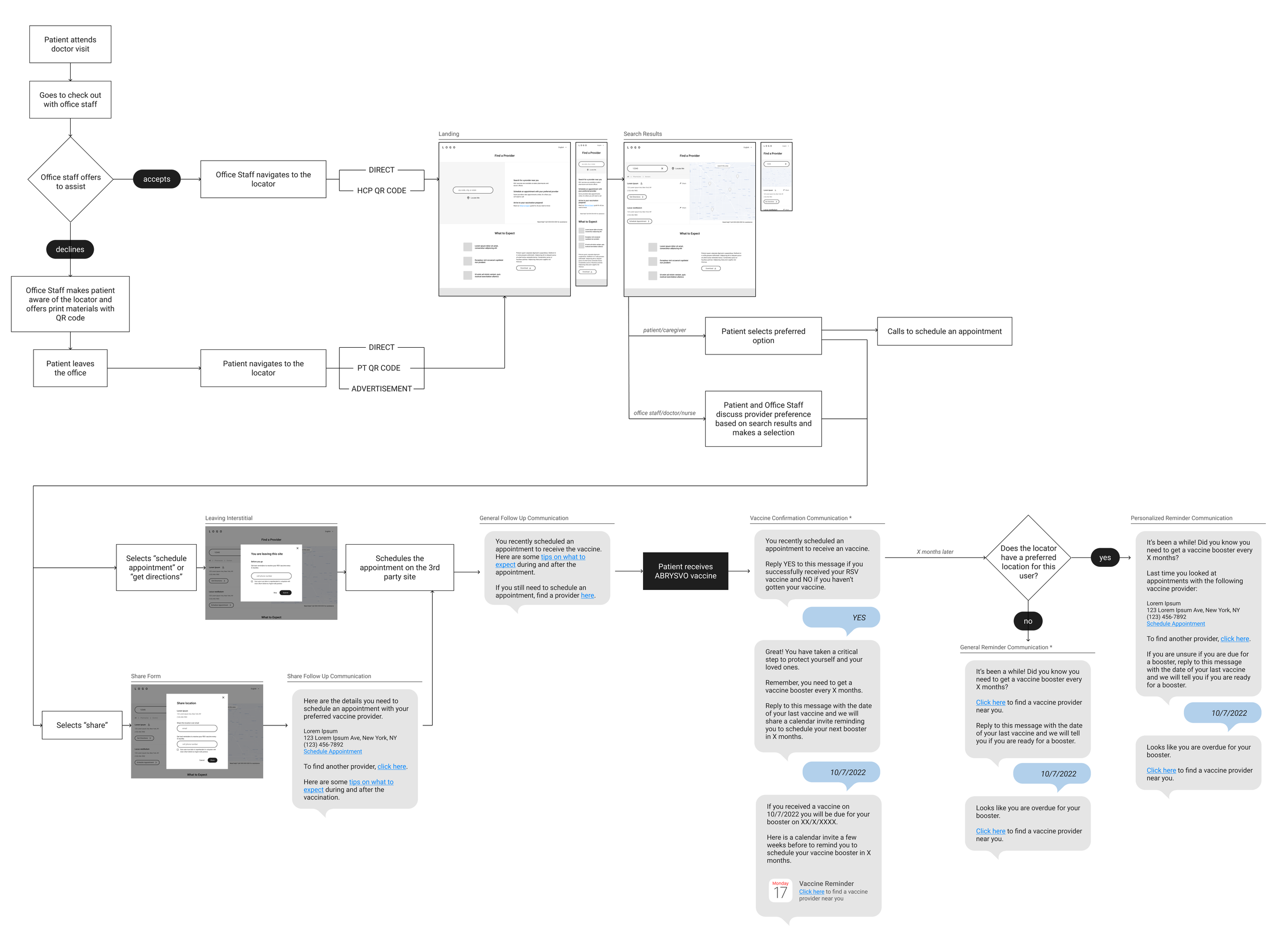
Since most large pharmacies have their own appointment booking platforms, we needed to consider how our tool would complement those services without introducing double communications or complexity. We developed a user flow to vet our approach:
Design
The website experience we designed, helped users find a nearby stocked pharmacy and linked them directly to the corresponding appointment booking site. Before leaving, we collected the users phone number and provided followed up communications that addressed drop-off and reminded people to get their maintenance dose. Since older individuals were the most at risk, we kept them in mind when making design decisions such as large button areas, a clean design, and displaying wheelchair accessibility for each result.